

Public health and energy planning are usually funded through separate budgets, run by separate agencies, and evaluated with separate metrics. Yet in practice, the two are inseparable. A vaccine refrigerator, a dialysis machine, and an emergency room ventilator all share one dependency that no amount of medical training can substitute for: a steady supply of electricity. This is why public health funding is increasingly finding its way into clean energy investment, and why the Solar Electric Light Fund has spent nearly three decades treating solar electrification as a form of public health infrastructure rather than a separate line item.
Why Clean Power Is a Public Health Requirement, Not a Convenience
Clinics in underserved and rural areas depend on continuous electricity to keep vaccines and temperature sensitive medicines safe. A single extended outage can destroy an entire cold chain supply, wiping out doses that took months to distribute and forcing communities to go without protection against preventable disease. This is not a hypothetical risk. It is a routine operational challenge for health facilities that depend on unreliable or nonexistent grid connections.
The same dependency runs into people’s homes. Power grids keep breathing machines and dialysis equipment running for patients managing chronic conditions outside of a hospital setting. When the grid fails, these are not inconveniences. They are life threatening emergencies for the most medically vulnerable members of a community.
Hospitals and health centers face this risk at scale. Emergency response during storms, floods, and other climate driven disasters depends on backup power systems that can keep surgical equipment, refrigeration, and life support running when the main grid goes down. As climate emergencies become more frequent and more severe, the ability of a health system to maintain power through a crisis is no longer a backup consideration. It is a core requirement of community health resilience.
Why Public Health Funding Is Starting to Flow Toward Energy Infrastructure
Recognition of this dependency is starting to reshape how funding gets allocated. Federal programs are increasingly tying clean energy upgrades directly to community health and resilience goals, treating grid modernization as a public health investment rather than a purely utility focused one. Proposed legislation at the federal level has explicitly linked green energy transitions to patient and worker health outcomes, reflecting a growing understanding that energy policy and health policy cannot be designed in isolation from each other.
International development funding is following the same logic. Institutions like the World Bank have backed public-private partnerships specifically aimed at bringing sustainable energy to schools and health centers, recognizing that a health facility without reliable power cannot deliver on its basic mission no matter how well staffed or well equipped it is otherwise.
Grid modernization plays a direct role here as well. Upgrading aging power infrastructure reduces the frequency of the blackouts that put local health facilities at risk in the first place. But modernization alone does not solve the problem for the communities most exposed to outages, which is why decentralized power solutions have become such a critical piece of the funding conversation.
Where Decentralized Solar Power Fits Into the Funding Picture
Decentralized solar energy systems, such as microgrids, as well as batteries offer something that grid modernization alone cannot guarantee: power that keeps running even when the main grid fails entirely. For rural clinics, remote health posts, and communities without dependable grid access, decentralized solar infrastructure is often the only realistic path to reliable power for medical equipment and vaccine storage.
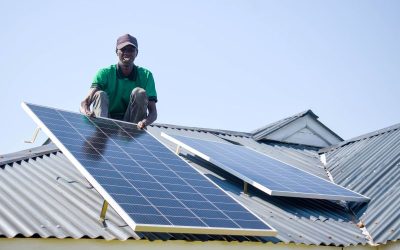
This is precisely where SELF’s work sits. By installing solar microgrids and battery backed systems directly at hospitals and clinics, SELF gives health facilities a source of power that does not depend on an unreliable grid or diesel fuel deliveries that can be disrupted by weather, cost, or supply chain failures. When public health funding supports this kind of clean energy investment, it is not funding two separate outcomes. It is funding one outcome: a health system that can actually function when its community needs it most.
Treating Clean Energy Investment as Core Public Health Infrastructure
The evidence points toward a simple reframing that funders, governments, and health systems are increasingly adopting. Reliable electricity is not a supporting utility for public health work. It is a precondition for it. Every dollar spent on solar microgrids, battery storage, and decentralized power for clinics and health centers is a dollar spent directly on vaccine protection, chronic disease management, and emergency response capacity.
As public health funding continues to expand its definition of what counts as health infrastructure, clean energy investment deserves a permanent place at the center of that conversation. SELF’s approach, building solar-powered systems specifically to keep essential health services running in the communities least able to absorb a power failure, is a working model of what that integration looks like in practice, and a clear argument for why the next generation of public health funding should treat clean energy as inseparable from the mission it supports.


0 Comments