
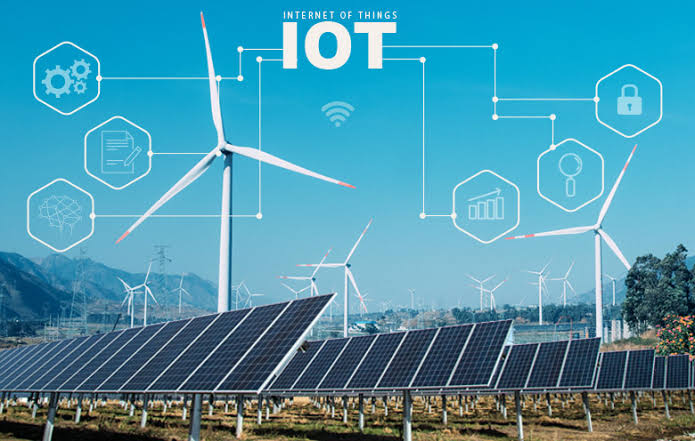
Most of us only think about electricity when it fails. The lights flicker, the fridge goes quiet, or a bill arrives that nobody can explain. Behind those moments sits a simple problem: For most of history, the people running power systems have had very little real-time information about what those systems are doing.
That is changing. The Internet of Things (IoT) is giving energy systems something they have long lacked: eyes, ears, and a nervous system. Connected sensors, meters, and controllers now report what is happening across grids, buildings, and solar installations, and software uses that information to make faster and smarter decisions.
At SELF, this matters for a specific reason. Roughly one billion people still live without reliable electricity. We have the solutions to power up these largely rural communities. Decentralized solar is connecting millions. But deploying these systems isn’t enough. They need to run efficiently for decades, while minimizing maintenance needs. Smart monitoring and control can make those systems cheaper to run and more likely to keep working into the future. Here is how IoT is reshaping energy management, and what it could mean for communities at the edge of the grid.
What is IoT in energy management?
The Internet of Things is a network of physical objects fitted with sensors, software, and connectivity, so they can collect and exchange data without a person in the loop. The objects range from household appliances and wearables to industrial equipment and critical infrastructure.
Every IoT system relies on four building blocks working together:
- Devices and sensors that collect data, such as temperature, voltage, or occupancy.
- Connectivity that moves that data between devices and central systems.
- Processing and analytics that turn raw readings into usable insight.
- Applications and services that act on those insights, from dashboards to automated controls.
In energy, this combination allows real-time monitoring, predictive analytics, automation, and adaptive control. Instead of reading a meter once a month and guessing, operators can see what is happening minute by minute and respond.
Why energy systems need smarter management
Global energy demand keeps rising as populations grow and cities expand. Meeting that demand without wasting resources or damaging the environment is one of the central challenges of sustainable development.
Much of the existing infrastructure was not built for the job. Historically, most electricity meters were analog. Errors, operational losses, and theft were common, and faults were often hard to diagnose or correct. Smart meters changed that by enabling two-way communication between the meter, the grid, and the customer.
The same logic now extends across the whole energy chain. Wide-area monitoring and smart meters have automated parts of electricity generation, transmission, distribution, and use. Distribution and end use remain less automated than transmission, which is where IoT is making the biggest difference.
The key IoT technologies behind smarter energy
Researchers who have surveyed the field point to a core set of technologies that make up modern IoT energy systems.
Smart meters. These record consumption in detail and communicate it automatically. They give utilities accurate data and give customers visibility into their own use.
IoT-enabled sensors. Small, low-cost sensors track conditions like temperature, light, occupancy, and equipment status, feeding the data that everything else depends on.
Smart grid technologies. Smart grids are bidirectional and increasingly autonomous. They allow power and information to flow in both directions, which matters more as homes and communities start generating their own electricity.
Building automation systems. These tie heating, cooling, and lighting to real-time conditions rather than fixed schedules.
Demand response systems. These adjust or shift electricity use in response to supply conditions, easing pressure when the grid is stretched.
Energy storage solutions. Batteries and other storage systems are far more useful when sensors and software manage when to charge and discharge.
Predictive analytics and machine learning. These tools learn from historical data to forecast demand, detect anomalies, and adapt to changing conditions without constant human input.
Remote monitoring and control. Operators can watch and adjust systems from a distance, which cuts the need for costly site visits.
Energy management platforms. These bring all the data together in one place, so operators can see the full picture and act on it.
How IoT improves energy efficiency
The benefits cluster around a handful of practical gains.
Real-time monitoring and analytics. Knowing exactly where and when energy is used is the first step toward reducing waste. IoT makes that visibility continuous rather than occasional.
Better resource optimization. With detailed data, operators can match supply to demand more precisely and avoid generating or buying more power than needed.
Predictive maintenance. Sensors can flag a failing component before it breaks. Fixing a problem early costs less than replacing a system after it fails, and it avoids outages in the meantime.
Smarter load management. Demand response and automated controls smooth out peaks, which reduces strain on equipment and lowers costs.
Automation. Systems that adjust themselves in response to conditions need less manual intervention and make fewer errors.
Higher-performing buildings. In smart buildings, machine learning can control heating, cooling, and lighting based on live sensor data. Residential buildings use energy largely for indoor comfort, while industrial buildings are driven by machinery and manufacturing, so the right controls look different in each.
Insight into consumer behavior. When people can see how they use energy, they tend to use it more wisely.
Seamless integration with renewables. Machine learning can predict when solar and wind output will rise or fall and help the grid absorb it. That is essential as renewable energy takes a larger share of supply.
IoT and renewable energy: a natural fit
Solar and wind are variable by nature. Clouds pass, winds shift, and output moves with them. Managing that variability is one of the main technical challenges of a clean energy system, and it is exactly the kind of problem IoT is good at.
Sensors report conditions in real time. Forecasting tools estimate what is coming. Storage and demand response fill the gaps. The result is a system that can use more clean power with less waste.
This is part of a broader shift we have explored before. The same data-driven tools that help balance complex grids also play a role in AI and climate change, where better forecasting and smarter control support the transition away from fossil fuels. The strongest case for that transition is not only environmental. It’s human, too. Renewable energy is helping more people, especially those without access to central power grids, gain access to reliable electricity.
The challenges that come with connected energy
IoT is not a magic fix, and the research is clear about the obstacles.
Security and privacy. More connected devices mean more entry points for attackers and more sensitive data to protect. Energy systems are critical infrastructure, so the stakes are high.
Interoperability. Devices from different makers do not always work together. Without shared standards, systems become fragmented and hard to expand.
Scalability. Solutions that work in one building or neighborhood may struggle across a whole city, particularly as network traffic grows.
Power and battery life. Sensors need energy too. Keeping them running without constant battery changes is a real design constraint.
Regulation and compliance. Rules differ across regions and are still catching up with the technology.
Data quality. Decisions are only as good as the data behind them. Faulty sensors and gaps in coverage can mislead automated systems.
Cost and return on investment. Installing sensors and actuators has to be balanced against the savings they produce. That math looks different in a wealthy city than in a remote village.
None of these is a reason to avoid the technology. They are reasons to design it carefully and to build in security, standards, and affordability from the start.
What this means for off-grid and underserved communities
Much of the research on IoT in energy focuses on smart cities and large buildings. That makes sense, since that is where the money and the density are. But some of the strongest benefits may lie in places that are neither.
Consider what it takes to keep a small solar system running in a remote area. Technicians may be hours away. Spare parts are slow to arrive. A failed battery or a dirty panel can go unnoticed for weeks, and the community loses power in the meantime. Remote monitoring changes that equation. If a system can report its own performance, a problem can be spotted early, diagnosed from afar, and fixed on a single targeted trip rather than discovered after significant problems arise.
That has real consequences for the services that depend on power:
- Health clinics can keep vaccines cold and equipment running, as in our work bringing clean water and vaccine access to 40,000 people in West Africa.
- Schools can stay lit and connected, which is the focus of our work on the solar electrification of schools.
- Water systems can keep pumping, a link we explore in the connection between water security and energy infrastructure.
- Small businesses can rely on steady power, as at the micro-enterprise center powering economic opportunity in Bessassi, Benin.
Reliability is what turns an installation into lasting change. A system that works for two years and then fails leaves a community worse off than expected. A system that is monitored, maintained, and trusted can anchor development for a generation. This is the thinking behind our broader effort to fight energy poverty through solar solutions.
Decentralized power and smart control belong together
IoT is a natural partner for decentralized energy. Traditional grids rely on a few large power plants and long transmission lines. Decentralized systems generate power close to where it is used, in many smaller installations.
That model is more resilient. When one part fails, the rest can keep running. It is also better suited to places where extending the central grid would be slow or prohibitively expensive. We have written about how decentralized energy can rebuild resilience after disasters destroy infrastructure, and about how decentralized solar can help end water and food insecurity.
But decentralization creates a coordination challenge. Many small systems are harder to oversee than a few large ones. Smart monitoring and control can close that gap, allowing operators to manage a distributed network with the same visibility they would have over a central one.
This is also where community models come in. Community-owned solar and community-based solar farms and gardens put generation, and decision making, in local hands. When residents can see how their system is performing, they are better positioned to manage it, maintain it, and trust it.
Future trends to watch
Researchers expect several developments to shape the next phase of IoT in energy.
- Edge computing. Processing data close to where it is collected speeds up decisions and reduces dependence on constant connectivity. That is especially valuable in areas with limited networks.
- AI and machine learning. Smarter algorithms will forecast demand and spot faults with increasing accuracy.
- Blockchain for energy transactions. Secure, transparent records could make it easier for neighbors to trade locally generated power.
- 5G connectivity. Faster, denser networks will support more devices and quicker responses.
- Better storage and grid flexibility. Improved batteries and smarter control will help systems absorb more renewable energy.
- Smart cities. Urban energy management will become more integrated and more automated.
- Stronger cybersecurity. Protection and privacy measures will need to keep pace with the number of connected devices.
For energy access, the most promising trend is the steady fall in the cost of sensors, connectivity, and computing. Technology that once suited only large utilities is becoming affordable for community-scale systems.
What needs to happen next
If smart energy technology is going to serve everyone, a few priorities stand out.
Design for affordability. Solutions must be cheap enough to work in low-income and rural settings, not only in wealthy cities.
Build on open standards. Interoperability keeps communities from being locked into a single vendor and makes systems easier to repair and expand.
Put security first. Connected infrastructure has to be protected from the outset.
Invest in skills. Local technicians who can install, monitor, and repair systems are what make them last. Technology without people trained to maintain it tends to fall into disuse.
Keep communities at the center. Data and control should serve the people who rely on the system, not only the organizations that run it.
The bottom line
IoT is turning energy systems from black boxes into transparent, responsive networks. It helps cut waste, integrate renewables, prevent failures, and put better information in the hands of the people who manage and use power.
The real test of this technology is not how sophisticated it looks in a smart city showcase. It is whether it helps the clinic keep its vaccines cold, the classroom stay lit after dark, and the water pump keep running in a village far from the nearest grid. Smart tools matter most when they close the gap and make reliable energy accessible for the people that traditional tools have left behind.

0 Comments